01
Ask first
Offer the app and wait for clear agreement. Curiosity works better than pressure or a secret “test.”
For loved ones
Explore a short check together, give them space to answer, and use the result as a starting point for a conversation—not as a verdict.
It is natural to want reassurance when you notice a change in someone you care about. Begin with respect for their judgment and privacy. Ask whether they want to see the app, explain that it is educational, and leave room for “not now.” A calm invitation is more helpful than arranging a surprise test or treating one score as an answer for the whole family.
If they choose to continue, agree on the kind of help they want. You might hold a charger, adjust the room, or show where a button is. The questions and tasks should still be theirs to complete.

Try these words
A suggested conversation opener—not a user testimonial.
Support without taking over
Offer the app and wait for clear agreement. Curiosity works better than pressure or a secret “test.”
Help open the app, adjust iPhone text settings if requested, and choose a quiet moment.
Let them complete questions and tasks themselves. Interface help should not become answering for them.
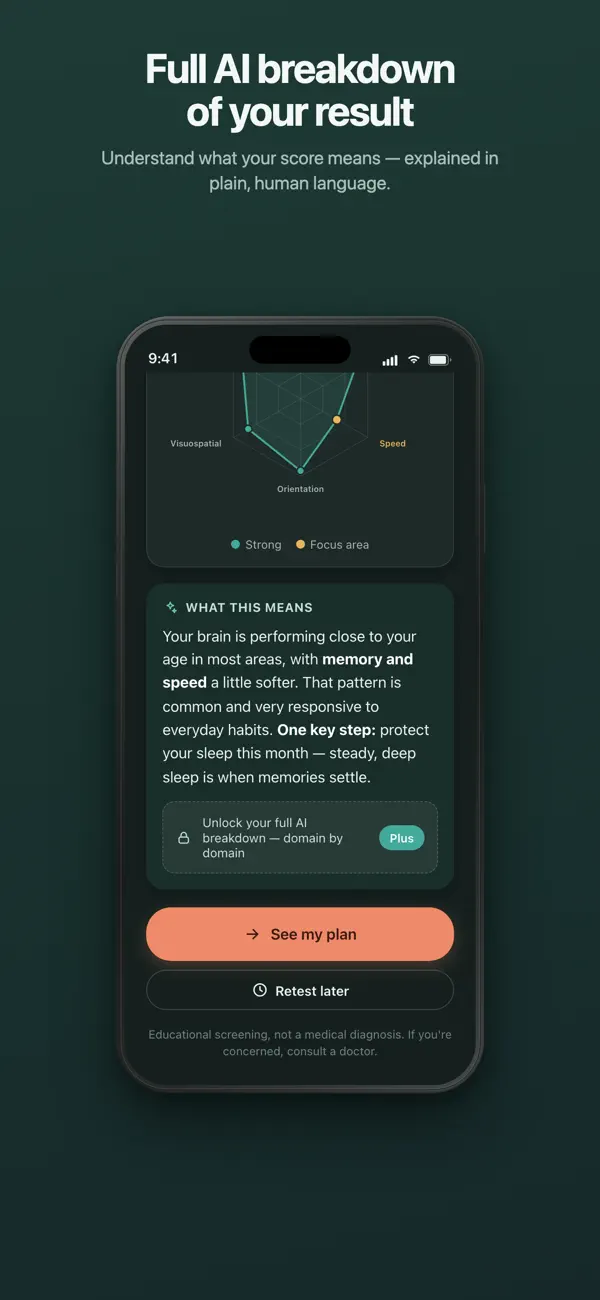
Review the result together only if they want to share it.
Do not use one result to reassure, alarm, or label someone.
If changes are concerning or affect daily life, encourage a healthcare conversation.
After the check
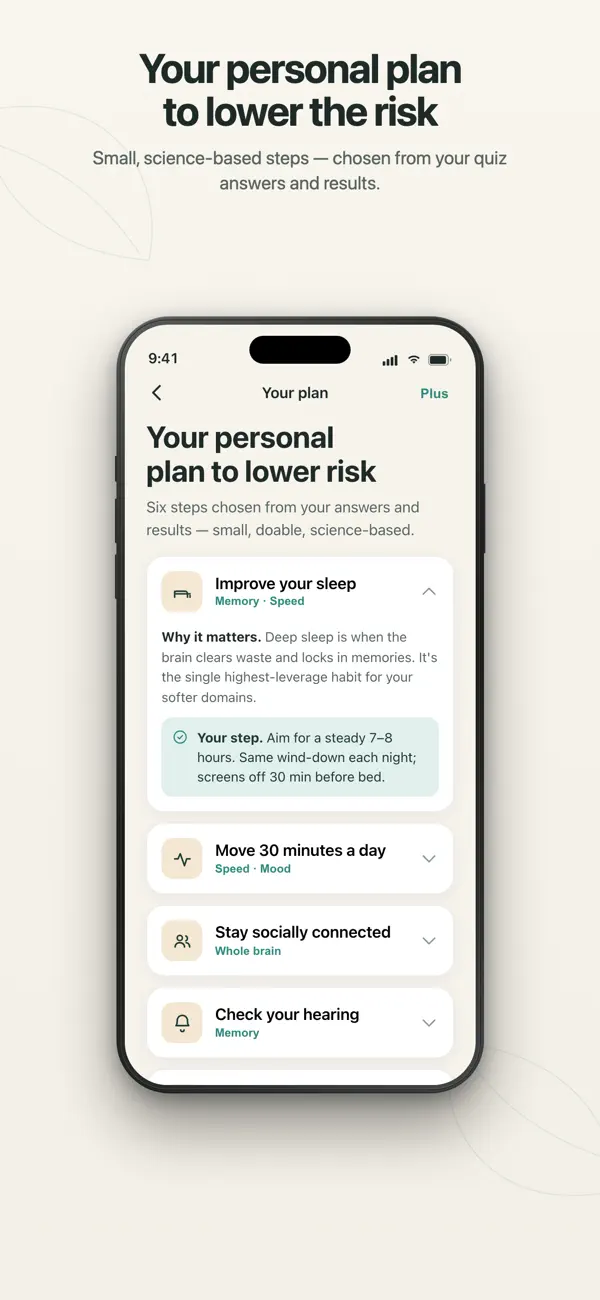
NeuroAge Plus currently lists a doctor-ready PDF summary. Sharing any result should remain the user’s choice. A self-check does not replace a professional evaluation when memory or thinking changes are persistent, worrying, or interfere with everyday life.
A calm next step
Begin together, then give them room to complete the check and decide what they want to share.

 Scan with your iPhone